
The AT passes through the traditional lands and territories of influence of 22 different indigenous peoples. It’s important to be cognizant of this on a thru-hike. One of the reasons I wanted to thru-hike the AT was to feel more connected to the land, and this means respecting and honoring the history of the land and its peoples. Frankly, other people have done a much better job of this than I have, even just being more mindful of these things as we hiked (or at least, it seems to me. I can’t get in other people’s heads). But indigenous people and territories were on my mind as I hiked, and I often wondered about the languages of the tribes of the AT.
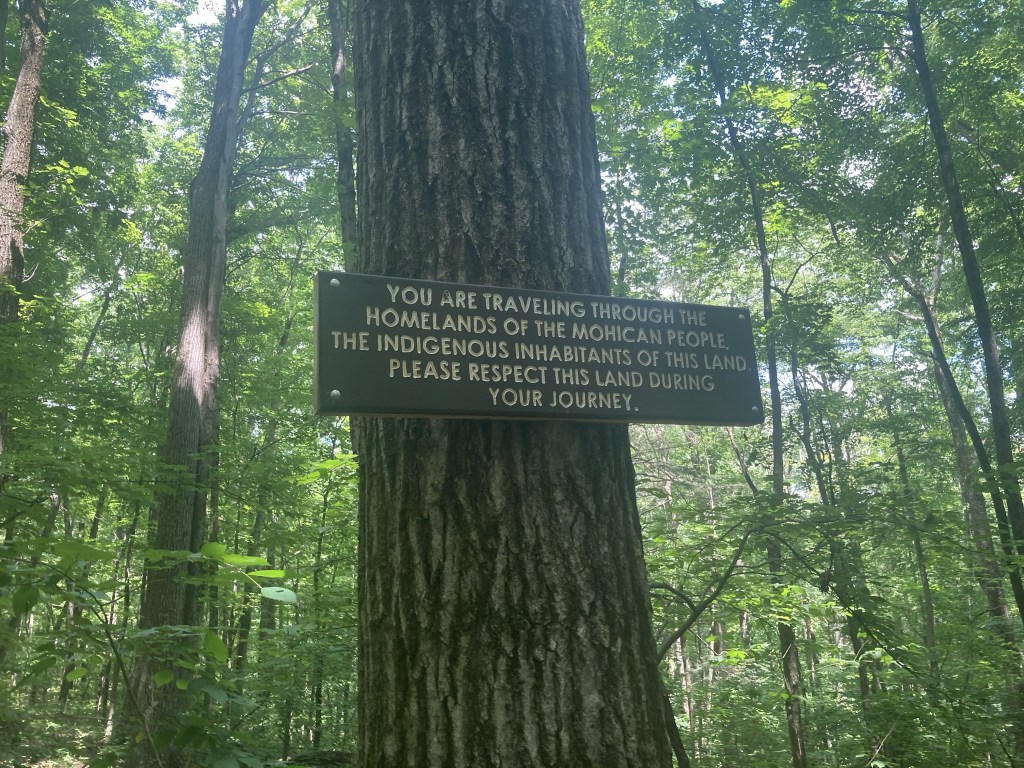
Indigenous languages, especially those of North America, are a particular interest of mine as a linguist. Many indigenous languages are extinct or endangered and at risk of falling out of linguistic and cultural knowledge. “Mass language death,” as my professor and all-around cool dude Norvin Richards put it, is a huge tragedy. It is yet another lasting and ongoing consequence of colonial practices and white supremacy. I believe that efforts to study and preserve endangered languages of all kinds, to ensure that the vast diversity of the human system of language endures, is the most important project of linguistics today.
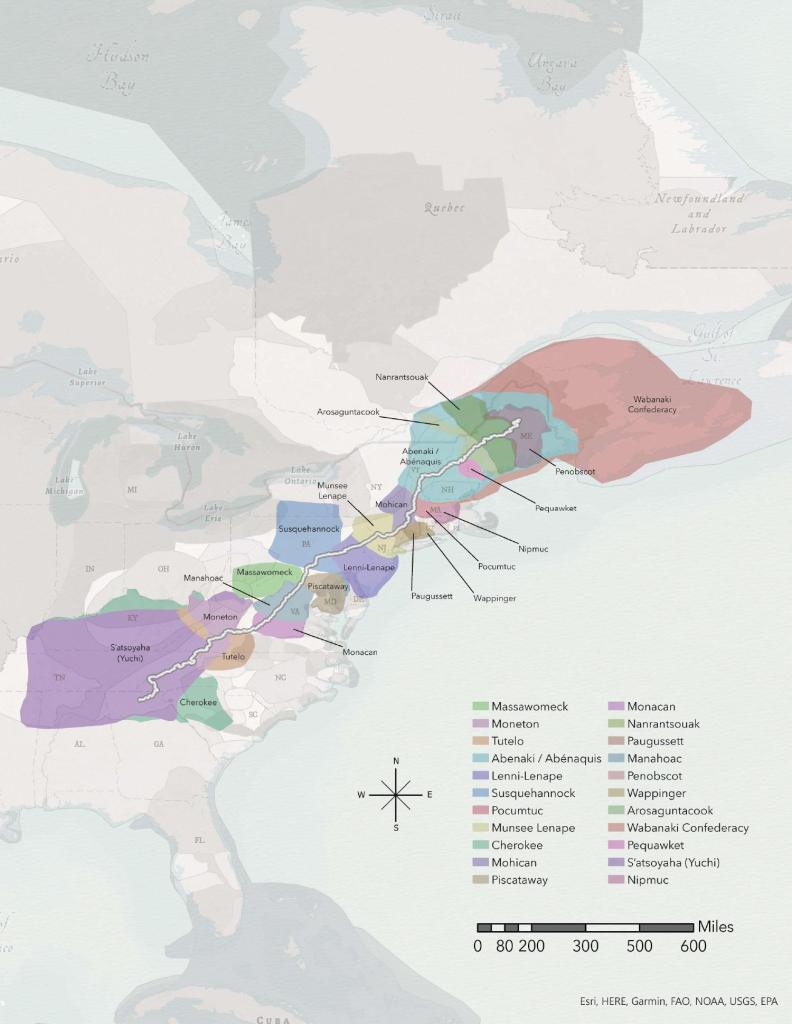
Here, I took a look at the indigenous peoples of the AT and the state of their languages. Disclaimer: this represents extremely cursory research on my part, just for curiosity’s sake.
| Native Nation | Language | # Native Speakers |
| S’atsoyaha (Yuchi) | Yuchi (Euchee) | 4 |
| Cherokee | Cherokee | 2100 |
| Tutelo | Tutelo (Tutelo-Saponi) | extinct |
| Moneton | Moneton | extinct |
| Monacan | understudied Siouan language | extinct |
| Manahoac | understudied (probably) Siouan language | extinct |
| Massawomeck | understudied Iroquoian language | extinct |
| Piscataway | Piscataway | extinct |
| Susquehannock | Susquehannock | extinct |
| Lenni-Lenape | Unami | extinct |
| Munsee Lenape | Munsee | 2 |
| Paugussett | Paugussett (Quiripi) | extinct |
| Mohican | Mohican | extinct |
| Wappinger | understudied Eastern Algonquian language | extinct |
| Pocumtuc | understudied Eastern Algonquian language | extinct |
| Nipmuc | Loup A (Nipmuc) | extinct |
| Abenaki | Abenaki (Wôbanakiak) (Western Abenaki) | 14 |
| Pequawket | Eastern Abenaki | extinct |
| Arosaguntacook | Eastern Abenaki | extinct |
| Nanrantsouak | understudied Abenaki language (Nanrantsouak) | extinct |
| Penobscot | Eastern Abenaki | extinct |
| Wabanaki Confederacy | Abenaki / Maliseet-Passamaquoddy / Mi’kmaq (Mi’kmawi’simk) | 14 / 455 / 7,140 |
In the words of Jake Peralta, “dat really bummed me out, man.”
There is hope, though. Several of these languages are undergoing active revival/revitalization, including Mohican and Nipmuc. Efforts to preserve more of these endangered languages are alive and well, and I sincerely hope they will remain so and only grow stronger to save these languages.
Happy Indigenous Peoples’ Day.


 Out There
Leave a reply to Val Rushanan Cancel reply